
History
There are several layers of history involved and I will attempt to unravel them for you to see. India is a very complex place!
There is the ancient history of the myth, that begins with a great battle between the Gods and the Demons. A visionary tells them that if they work together they can find the Nectar of Immortality. After they do everything to find it, they quarrel over who would get it first and the Gods escape with the nectar, stopping on earth for 12 days, before taking it up to heaven. In four places they offered a few drops of the nectar into the different sacred rivers. One such place is Allahabad, India, which is now called Prayagraj.
→ The full myth of the Kumbh Mela
Ancient Kumbh Mela History
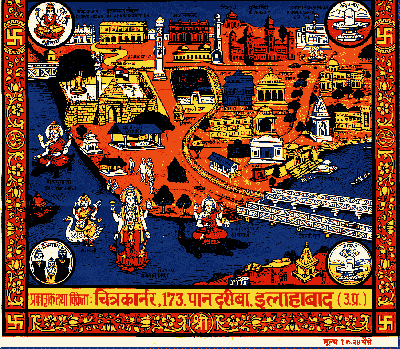
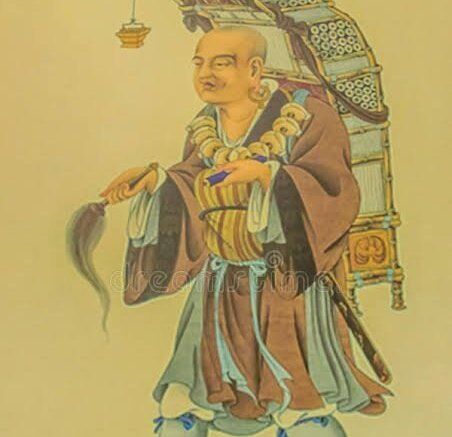
The first recorded history of large groups of people holding a religious gathering here came from the diary of a Chinese traveler dating back to 500 AD. In the diary, he described thousands of people coming to the opening day of the month-long festival hoping to be blessed with some of the wisdom of the Gurus.
Why People Come
Some come to bathe in the holy rivers, while others come to make offerings for the peaceful afterlife of their dead ancestors. Often, they arrive with a small bundle of some of their most needed personal effects or a small statue of their most sacred deity. Whatever their purpose is, individuals often simply want a chance to share in the experience. Soon, families and whole villages join together creating new relationships and strengthening old ones.
Hindus believe that one of the ways to gain merit or “good karma” is to go on pilgrimage to some holy place at least once in a lifetime. According to the ancient myth, the huge river bank beside the city of Allahabad, also known as Prayag, is one such place.
The Tent City
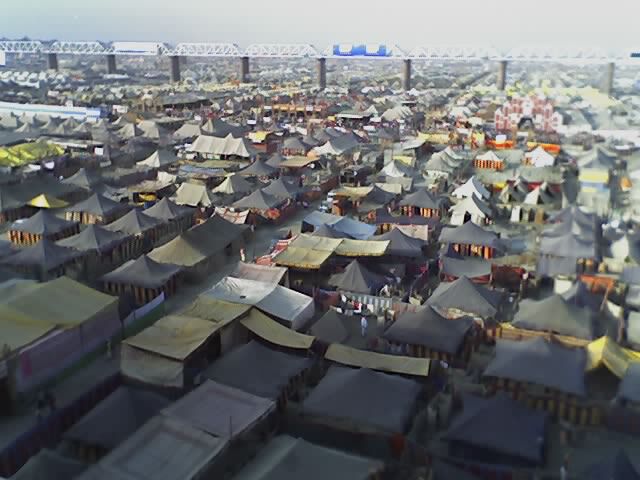
During Kumbh Mela, a giant tent city is erected below the great, red fort at Allahabad. On this vast open plain, the multitudes will come together to live, pray, and celebrate. It is said to have taken place here every twelve years going back for countless centuries.